
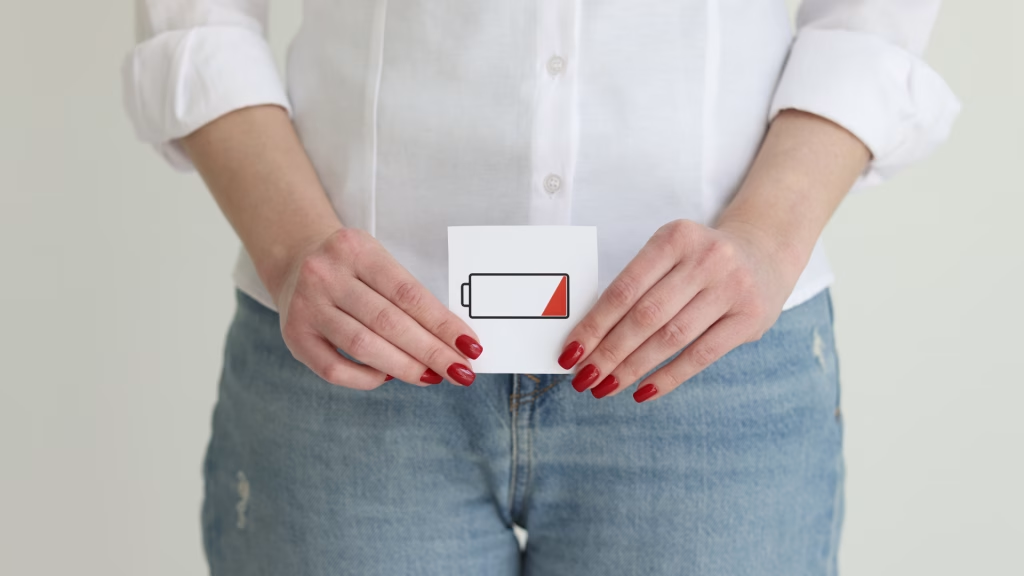
We’ve all heard (or said) it before:
“I just have low libido.”
“Our sex drives are just really different.”
“I don’t have any desire for sex like he does.”
“I don’t really get aroused.”
It’s easy to assume that these statements are just the natural differences between men and women when it comes to intimacy. And sure, desire and libido do fluctuate between the two. But if you’ve spent years believing that you chronically have no libido or little-to-no desire, it’s time to pause and ask two very important questions:
- Is this normal and how should it be?
- Why does it feel like this? What is causing me to think or be this way?
We often hear that in a general sense, men can tend to have higher libido while women can have lower libido… but this is not always the case. When we as women accept low libido as simply a fact of life or an inherent difference between men and women, we unknowingly put our potential for desire in a box. But here’s the truth: You can actually grow in desire and boost libido.
So what actually impacts libido? Let’s break it down.
1. Pain
If sex is painful, your body is not going to want it. This is one of the most obvious yet overlooked reasons for low libido. It’s no surprise that when intimacy becomes associated with pain, your desire for it naturally wanes– both in and out of the bedroom. If your body isn’t responding in a way that feels pleasurable, why would you seek it out? This can be incredibly frustrating and confusing, adding another layer to the emotional burden.
I work with women to address the root causes of pain with insertion by focusing on nervous system regulation, chronic pain management, and practical mind-body strategies. Healing is possible, and when pain is no longer a barrier, desire can start to flourish. Painful sex (or vaginismus) is never okay, and if you think that’s what you are experiencing, watch the video, “What is Vaginismus“?
2. Not Understanding Female Arousal
Arousal for women is not instant. Science shows that it takes much longer for a woman to become aroused than a man. Men’s arousal is often compared to a light switch—quick and spontaneous. Women’s arousal, however, is more like a dimmer switch, requiring time, connection, and stimulation. If you’re expecting to feel instantly turned on the way a man might, you may mistakenly believe you’re just not a sexual person, when in reality, you may just need more time and the right kind of stimulation.
Often times, women experience whats called responsive desire, which means their arousal follows, rather than precedes, sexual activity. Unlike spontaneous desire, which happens out of the blue, responsive desire kicks in after physical or emotional intimacy has already begun, once the brain decides it wants to engage in intimacy. Many women don’t feel “in the mood” until they are already engaged in touch, connection, or sensual activities.
If you’re waiting to feel desire before initiating intimacy, you might be missing out on opportunities to enjoy it and may even shut down intimacy because you’re not “feeling it”. Instead, try setting the stage—engage in activities that make you feel relaxed, connected, and open to pleasure. This could be cuddling, deep conversation, or even non-sexual touch. The more you nurture responsiveness, the more natural arousal can become.
It’s not about “fixing” your desire, it’s about understanding how your body works and giving yourself the time and space to enjoy the process.
3. Believing Sex is More for the Man Than for You
If you’ve absorbed the message that sex is primarily for your husband and not for you, your brain will naturally deprioritize desire or even feel “wrong” for feeling it. Sex was designed to be mutually fulfilling, and when you recognize that your pleasure matters just as much as his, it can shift the way you view intimacy.
4. Not Feeling Connected or Safe
Emotional safety and connection play a huge role in female desire. If there are unresolved tensions, lack of communication, or a general feeling of disconnection in your marriage, your body is not going to be on board for intimacy. Emotional intimacy is the foundation for physical intimacy.
5. Not Acknowledging the Complementary Aspects of Male and Female Sexuality
Men and women have beautifully designed differences when it comes to sex, and understanding these differences can actually help you work with them instead of against them.
- Spontaneous vs. Responsive Desire: As mentioned above, men often experience spontaneous desire, meaning they feel it before anything even happens. Women, however, are more likely to experience responsive desire, which means desire follows arousal. In other words, you may not feel like having sex until things actually start happening, and that’s completely normal.
- Anatomy and Orgasm: Studies show that the majority of women do not orgasm from penetration alone. The female body is designed differently, with external stimulation to the clitoris being the primary way to reach orgasm. Understanding how your own body works can help remove frustration and unrealistic expectations.
- Cycles Matter: Men operate on a steady 24-hour hormone cycle. Women, however, have a monthly cycle that deeply impacts libido. Desire may be high during ovulation and lower at other times in the cycle. Learning to work with your body instead of against it can make all the difference.
6. Feeling Pressure or Obligation
Sometimes, just the expectation that we should feel desire can make it disappear. The more pressure we put on ourselves to “be in the mood,” the less in the mood we actually are. Letting go of pressure and instead focusing on connection, touch, and intimacy without an agenda can help desire naturally build.
If your mind is preoccupied with anxiety around why your body isn’t getting turned on, what he’s thinking about all of this, or performing well, arousal and orgasm are not likely.
7. Not Being Fully Rested, Healthy, or Regulated
Exhaustion, stress, poor diet, and dysregulation in the nervous system can all kill libido. If you’re running on fumes, your body is not going to prioritize sex. Taking care of your overall health—getting enough sleep, reducing stress, eating nourishing foods, and regulating your nervous system—can have a huge impact on desire.
In order to have an appropriate sexual build-up and release, your body needs to be able to balance and harmonize your parasympathetic restful state and your excited sympathetic state.
Give Yourself Grace and Meet Your Body Where It’s At
Your body is not broken. If desire feels low, instead of blaming yourself or assuming this is just how you are, start meeting your body where it’s at. It’s okay to take small steps, to learn more about how your body works, and to make adjustments that support your intimacy. It’s also okay if you try in so many ways to build desire but just can’t seem to get there; don’t put pressure on yourself and instead, focus more on doing what is best for you, learning what you prefer, and creating space for growth without pressure or speed.
Practical Ways to Work on Desire and Libido:
- Address pain. If sex is painful, find out why and work on it. Book a free consultation call to learn more about getting past it!
- Understand your arousal process. Give yourself time to get there, and don’t rush it.
- Challenge limiting beliefs. If you’ve believed sex is just for him, shift your mindset to see it as something designed for both of you.
- Build emotional connection. Spend quality time together, communicate, and cultivate intimacy outside the bedroom.
- Work with your cycle. Pay attention to when your body naturally feels more inclined toward intimacy and plan accordingly.
- Reduce stress and prioritize health. Make sure your body is getting the care it needs.
- Remove pressure and focus on intimacy. Take the goal of “needing to want it” off the table and focus on enjoying connection.
Understanding all of this can be difficult in the moment. Although you’re attracted to and enjoy your partner, you don’t know why you have little-to-no desire to be intimate with them. You feel guilty and your partner may feel hurt. Both possibly failing to realize that this is a natural physiological process that often can result from many different factors.
Desire is not a fixed trait. It’s something that can be nurtured, supported, and developed. Your body is designed for intimacy, and by working with it instead of against it, you can cultivate a deeper, more fulfilling connection with your husband.
Sex is designed to be desirable, pleasurable, and connecting. And you can restore your relationship with yourself and your partner so that intimacy is full of life and not full of unconscious anxiety. This is something I often work on with my clients. It’s not just about getting past pain, but reclaiming a beautiful sex life, the way it’s meant to be.
If pain has been a barrier to intimacy for you, schedule a free consultation. We’d love to connect and encourage you to enjoy intimacy without pain. Healing is possible, & you deserve intimacy without pain.